
A common misconception is that a cross-chain swap is simply a token exchange with one extra button. It is not. When assets move between blockchain networks, the user is asking several independent systems to coordinate: a source-chain transaction, a bridge or interoperability mechanism, a destination-chain transaction, and often a decentralized exchange. The visible interface may look like a single trade, but the underlying operation is a chain of permissions and state changes.
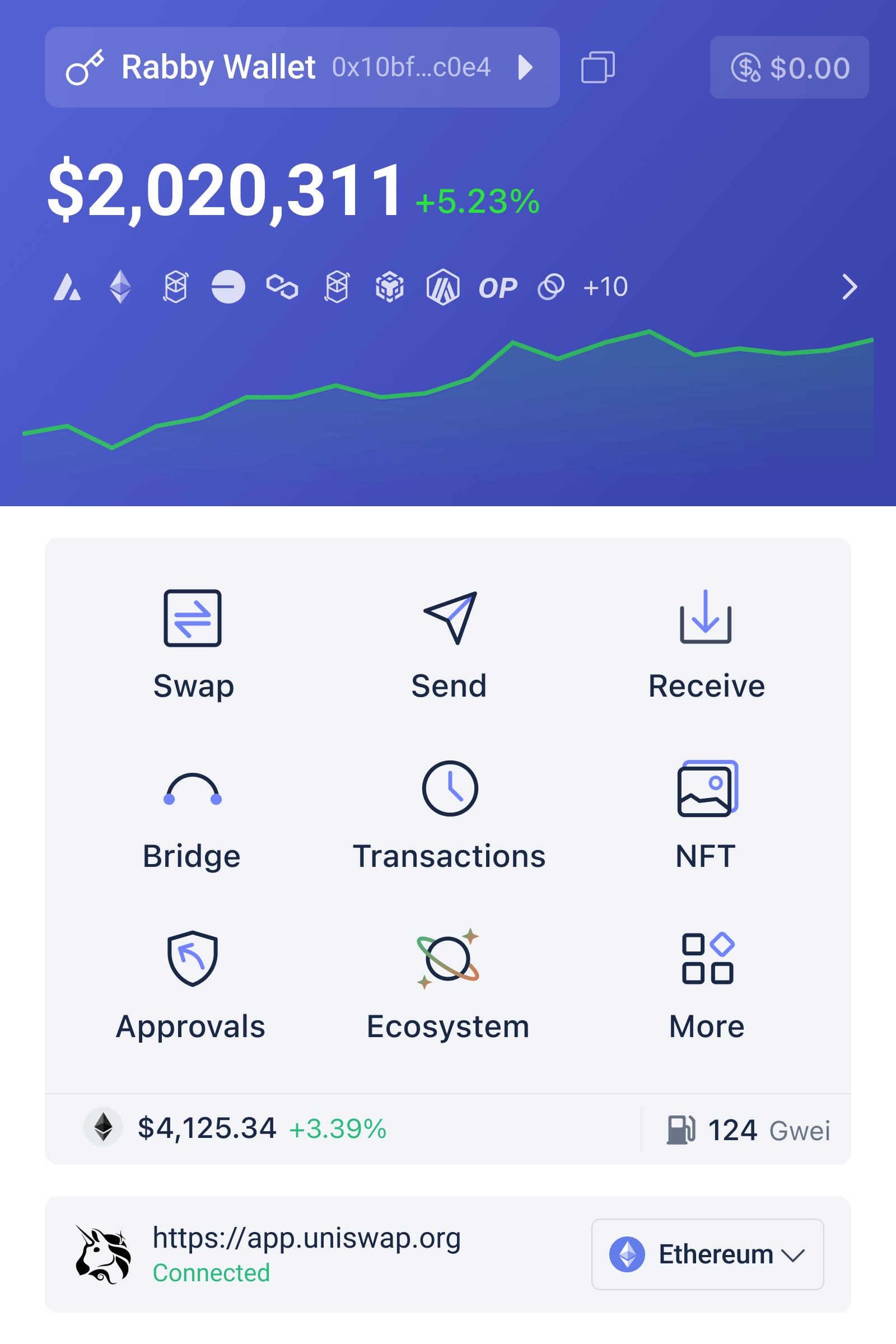
That distinction matters for anyone using DeFi in the United States, where transactions may involve unfamiliar networks, changing gas conditions, and smart contracts with different risk profiles. A wallet such as Rabby can make this complexity more legible by presenting transaction simulations, network information, contract warnings, and asset details before approval. Those features do not eliminate protocol risk, but they can improve the quality of the decision a user makes.
What a cross-chain swap actually does
Suppose a user holds an asset on one network and wants a different asset on another. A conventional swap on a decentralized exchange normally changes balances within one chain. A cross-chain swap must solve a larger coordination problem: how can a protocol recognize that value was deposited on the source chain and then release, mint, or exchange value on the destination chain?
Different systems approach this problem differently. A bridge may lock an asset in a smart contract and issue a corresponding representation elsewhere. A liquidity network may allow a user to deposit one asset into a pool while a liquidity provider sends the requested asset on the destination chain. An interoperability protocol may transmit a message that instructs a destination-chain contract to complete an action. These designs are not interchangeable. They create different assumptions about custody, liquidity, validators, message verification, and failure recovery.
The most useful mental model is therefore not “one swap across two chains,” but “a sequence of state transitions.” First, the wallet may request approval for a token contract. Second, the user may submit a deposit or swap transaction. Third, an external mechanism observes and verifies that event. Finally, a destination transaction distributes or exchanges assets. A failure at any stage can produce delays, unexpected fees, a different token representation, or a need to contact the relevant protocol’s support process.
This is also why quoted output should be treated as conditional rather than guaranteed. Prices can move while a cross-chain operation is pending. Liquidity may be thinner on the destination network. Gas costs can change. Slippage—the difference between the expected and executed exchange rate—may become more significant when multiple transactions and markets are involved.
Why cross-chain activity expands the security surface
DeFi security is often discussed as though the main danger were a malicious token or a compromised website. Those are real concerns, but cross-chain activity adds a more subtle problem: the user must trust a larger set of mechanisms at once. The bridge, router, relayer, liquidity pool, token contracts, and destination application may each introduce separate assumptions.
A bridge can be technically sound yet exposed to operational risk if its signing process or validator set is compromised. A liquidity-based system can function correctly yet become expensive or unreliable when a pool is imbalanced. A token approval can remain active after the intended trade, allowing a later exploit of the approved contract to attempt transfers. A destination token can have a familiar name while being an unrelated or low-quality contract.
Transaction authorization is another boundary that users frequently underestimate. Connecting a wallet to a website does not necessarily move funds, but signing an approval or contract interaction can grant meaningful authority. The important question is not only whether a transaction looks familiar; it is what the contract is permitted to do, which assets are affected, and whether the permission is limited in amount and duration.
Wallet-level warnings can help at this point. Rabby is designed for multi-chain use and can display transaction simulations and risk indicators before a user confirms an action. Used correctly, such information helps answer practical questions: Is the balance expected to decrease? Is the destination contract recognized? Is the transaction requesting an unusually broad approval? Does the network match the intended application?
However, a warning system is not an oracle of safety. Simulations depend on the current state of contracts and chains, and they may not capture every economic, governance, or social-engineering risk. A legitimate-looking transaction can still be a poor trade, and an unfamiliar contract is not automatically malicious. The wallet is best understood as a verification layer, not as a guarantee.
How to review a cross-chain transaction before signing
A disciplined review begins before the wallet opens. Confirm the source network, destination network, asset symbol, and the official application domain. In the US, where users may move between widely used Ethereum-compatible networks and other ecosystems, network names can be deceptively similar. A wrong network selection can lead to failed transactions, unsupported assets, or funds that require additional recovery steps.
Next, separate the operation into its permissions. Is the wallet asking for a token approval first? If so, determine whether the approval is limited to the amount needed or effectively unlimited. Is the swap contract the same one the application intends to use? Does the final transaction send assets to the expected destination address? A careful user should be able to explain the role of each signature in plain language before proceeding.
Then examine economic conditions. Slippage tolerance is not a safety setting by itself; it is a trade-off. A very low tolerance may cause a transaction to fail during ordinary market movement, while a very high tolerance can permit a materially worse execution price. Bridge fees, destination gas, liquidity-provider fees, and network congestion may all be relevant. The cheapest displayed route is not necessarily the most robust route if it depends on thin liquidity or a complicated sequence of contracts.
For users who have not yet configured a multi-chain wallet, the rabby extension download can be a practical starting point, provided it is obtained from a trusted source and installed with normal browser-security precautions. After installation, users should verify the extension, create or import a wallet only through the intended flow, protect the recovery phrase offline, and avoid entering that phrase into websites, forms, or support chats.
Rabby wallet as a decision-support tool
The value of a wallet interface is not merely convenience. In a complex transaction, presentation changes what the user can notice. A network-aware wallet can reduce errors by making chain selection explicit. Simulations can reveal likely balance changes before execution. Contract and token warnings can interrupt a rushed approval. These are forms of decision support: they translate technical transaction data into questions a human can evaluate.
That support is most useful when paired with a repeatable habit. Treat every unfamiliar transaction as an investigation, not a confirmation prompt. Read the wallet’s estimated changes, compare them with the application’s stated intention, and stop if the two descriptions conflict. For high-value operations, a small test transaction may provide more information than a confident assumption, although even a test does not prove that a protocol is secure.
There is a further limitation: security and usability can conflict. More warnings may protect cautious users but create warning fatigue if every interaction appears equally alarming. A sophisticated interface can also encourage overconfidence, especially when a green indicator is interpreted as approval rather than limited evidence. The right response is not to ignore warnings or obey them mechanically, but to understand what each warning can and cannot establish.
What to watch as cross-chain systems mature
The future of cross-chain swaps will depend less on attractive interfaces than on how systems handle verification, liquidity, reversibility, and failure. Users should watch whether protocols explain their trust assumptions clearly, how they respond to stuck transactions, and whether approvals and destination assets are presented with enough precision to distinguish similar-looking tokens.
A plausible near-term scenario is that wallets become more important as coordination layers. If applications continue to abstract multiple chains into one interface, the wallet may become the place where users see route composition, contract permissions, expected asset changes, and risk signals together. That could reduce routine mistakes, but only if the underlying data is accurate and users understand its limitations. Conversely, if abstraction hides too much of the transaction path, convenience may increase while informed consent decreases.
The durable lesson is simple but not superficial: cross-chain security is a process of validating assumptions. Before signing, identify who holds or moves value, which contracts receive authority, how the destination state is created, and what happens if one step fails. Rabby can make that review easier, but the user remains responsible for interpreting the transaction and choosing whether its risks are acceptable.
Frequently asked questions
Are cross-chain swaps riskier than ordinary decentralized-exchange swaps?
They can be, because they usually involve more components and more failure points. The difference is not that every cross-chain route is unsafe; it is that users must evaluate bridge or interoperability assumptions in addition to ordinary exchange risks such as slippage, approvals, liquidity, and smart-contract exposure.
Can Rabby guarantee that a DeFi transaction is safe?
No. A wallet can provide simulations, warnings, network context, and transaction details, but it cannot guarantee the honesty of a protocol, the future behavior of a contract, or the economic quality of a trade. Use its signals as evidence in a broader review rather than as a substitute for judgment.
What is the most important habit for new cross-chain users?
Pause before signing and reconcile three things: the application’s stated action, the wallet’s estimated balance changes, and the permissions requested by the contracts. If those descriptions do not align, do not proceed until the discrepancy is explained.